AFFORDABILITY
Republicans Will Continue to Expose and Oppose Bad Policy. As lawmakers in the Illinois House prepare to return to legislative session this week, Illinois House Minority Leader Tony McCombie has set expectations as to where her caucus’ priorities will be when the House convenes on January 20th.
At a recent City Club of Chicago event, Speaker of the House Emmanuel “Chris” Welch said the legislature is focused on “bringing down the cost of living,” and suggested that meeting the everyday needs of Illinoisans takes precedence over requests for new high-profile projects like a Bears stadium.
But for Leader McCombie, real fiscal responsibility must be backed up with good public policy–a stark contrast she says her caucus will continue to expose, considering recent budgets based on billions of dollars in tax hikes and gimmicks that Illinois’ Democrats have become accustomed to.
Republican lawmakers have underscored that affordability must also include fiscal restraint and tax relief. Leader McCombie said in a recent interview that she thinks 2026 “would be finally a good time for Democrats to bring Republicans into the room” and work more collaboratively — but cautioned that Republicans will continue to “expose and oppose bad policy” during the anticipated legislative session year.
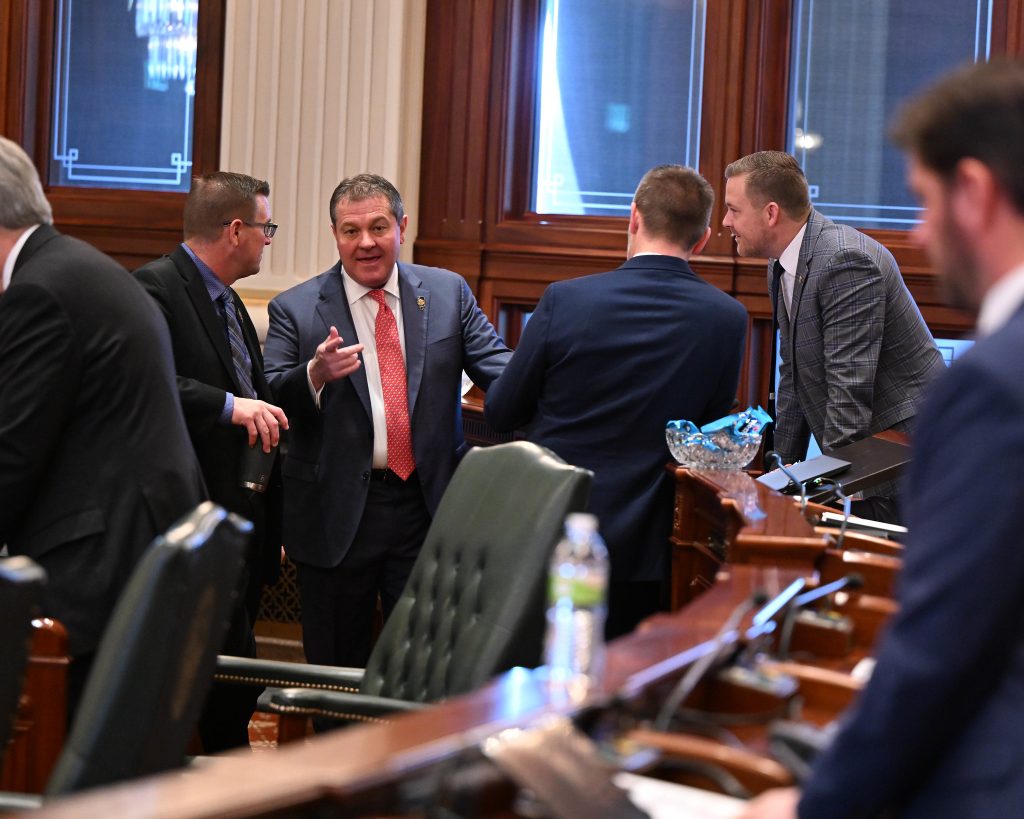
Rep. Mike Coffey said Illinois’ policies have created high prices to spread across our state:
“Our state is in a position to lower the cost of living for Illinois residents, but we must have bipartisan support to craft policies that offer relief,” said Coffey. “I would like to see affordability be a priority for Illinois Democrats this spring session. We have opportunities at the state and federal level but we need to take action and get bills signed into law.”
Read more about what to expect this year in the General Assembly here: Illinois lawmakers return with $2.2B budget gap, affordability focus.
Bipartisan support for ‘No Tax on Tips’ in the Illinois House
House Republicans have several bills in the legislature right now to stop taxes on tips in Illinois. Democrats refused to call any of these measures for a vote last year. As we head into the spring session, let’s hope Illinois Democrats can put people before politics for once and support a policy to actually save residents some money.
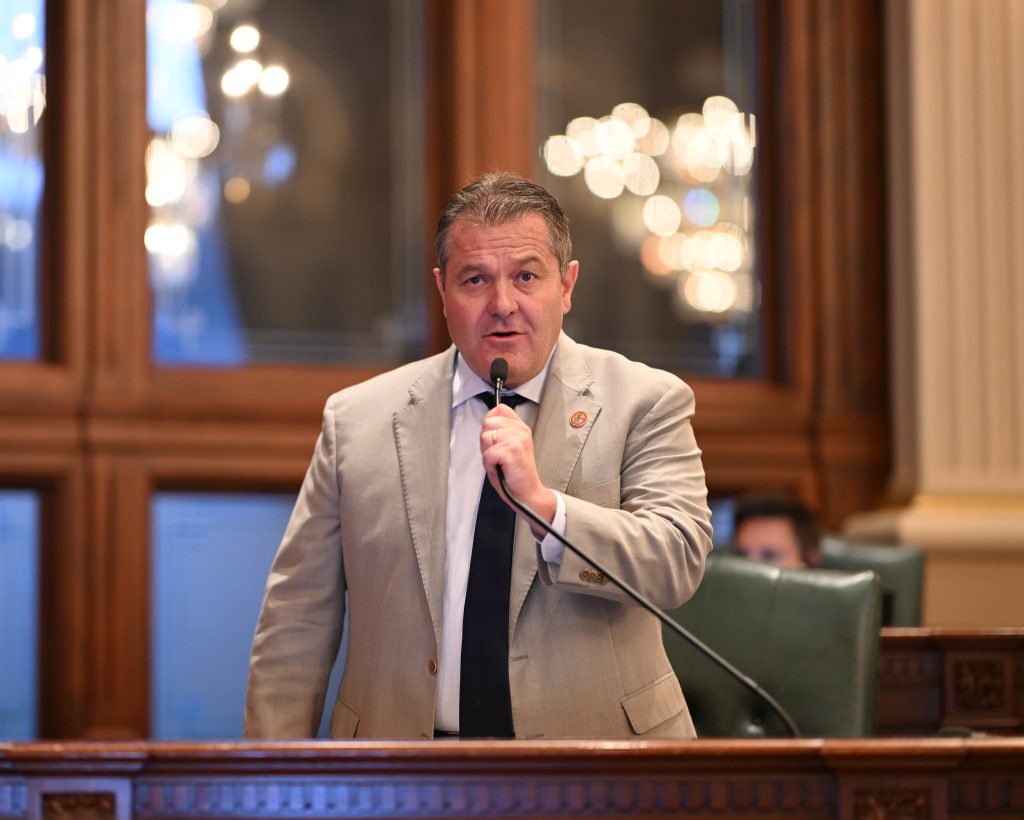
“The Illinois Democrats raised taxes on Illinois families in 2025, even denying federal relief through “No Tax on Tips and Overtime” and decoupling from federal business incentives,” said Coffey.
“We must ensure Illinois families and businesses are in a position to grow and help build our economy, but overtaxing is not the answer.”
Illinois decoupled from various provisions of federal tax policy last fall, impacting things like loss deductions and other corporate taxes. Legislators did not change the state’s tax policy to reflect President Donald Trump’s campaign promise of no tax on tips.
With that policy now federal law, Illinois state Rep. Anthony DeLuca, D-Chicago Heights, said the state should act.
“This is another one of those issues. This keeps more money in people’s pockets and helps them deal with the affordability issues that are out there,” DeLuca told TCS. “So I believe if there’s enough support to approach it from that standpoint, if we can somehow manage to put the politics of the issue aside, this is good policy.”
DeLuca filed House Bill 4329 last week.
State Rep. Ryan Spain, R-Peoria, filed similar legislation with House Bill 1383 in March 2025, which has other Republican legislators as sponsors. Spain’s measure remains in the Rules Committee, where it’s been since April.
Read more from The Center Square.
BUDGET
Spring session overshadowed by $2.2 billion budget deficit. One of the largest issues currently facing the Illinois General Assembly is the unsustainable trend of record State spending. Governor Pritzker’s own Governor’s Office of Management and Budget (GOMB) has generated a fiscal projection that estimates an approaching deficit, based on estimated revenues and expenditures, of $2.2 billion in Fiscal Year 2027, which begins on July 1, 2026.
The General Assembly is bound, by the Constitution of Illinois, to enact a “balanced budget,” in which spending matches expenditures. In the past several years, this mandate has been sort-of met by enacting last-minute “midnight” tax increases and other budget gimmicks and sleights-of-hand. The combination of these policies, coupled with unchecked spending by the Democratic majority, is one of the reasons GOMB projects an annual budget deficit that will be $2.2 billion per year, and growing, over the next five years.
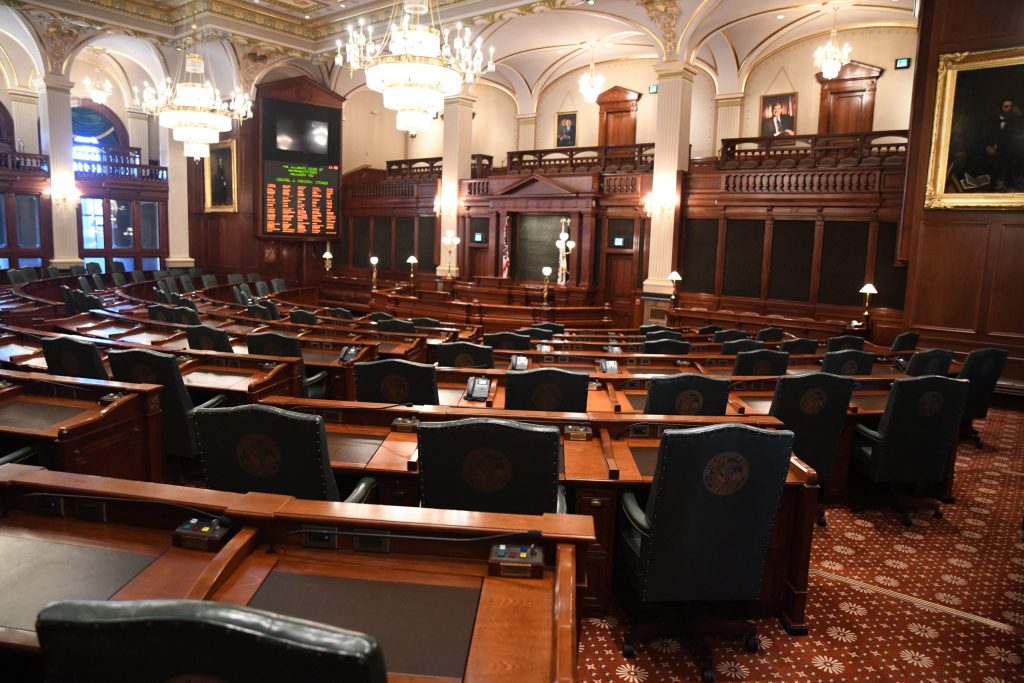
When Gov. Pritzker releases his proposed FY27 budget on February 18th, he may project a smaller FY27 deficit than GOMB projected last October. A downward-revised projected deficit could be projected based on increased revenues into the state coffers. Democrats have “decoupled” Illinois from some pro-growth tax reforms in the federal One Big Beautiful Bill Act enacted last year. Furthermore, the President Trump-led U.S. economy appears to be more resilient than experts and economists predicted; and this nationwide resiliency could help all the states, including Illinois.