ILLINOIS’ BUDGET
Illinois sees strong revenue growth to start fiscal year

Fiscal year 2027 revenue is up 7% through the first two months, according to the Commission on Government Forecasting and Accountability. That’s been boosted by strong performances for corporate and personal income taxes and sales tax growth.
While it is early in the fiscal year that began on July 1, revenue numbers shed some light on the state’s economy. Positive numbers at the beginning of a fiscal year can also provide a cushion for the state’s budget if the winds change. The budget signed by Gov. JB Pritzker anticipated very little revenue growth in FY27.
The 7% overall growth in July and August means revenue is up $515 million through the first two months of FY27 compared to the prior year. And the three main revenue sources for the state are largely responsible for it. Personal income tax is up 5%, corporate income taxes, which have been sluggish over the last year, are up 50.9%, and sales taxes are up 11.6%.
“While this level of growth is unlikely to continue at such an elevated rate, the stronger than expected totals to start the year will provide additional financial cushion if revenues were to weaken later in the fiscal year,” COGFA’s report said.Read more on CGFA’s Monthly Briefing from Capitol News Illinois
PUBLIC SAFETY

Three years after Illinois implemented the elimination of cash bail, the consequences of the state’s pretrial system are becoming increasingly difficult to ignore.
Since the Pretrial Fairness Act took effect, defendants released into Illinois communities have been accused of committing violent crimes, while failures in electronic monitoring have raised serious questions about public safety and accountability.
Some of the cases include:
- A man accused of setting a CTA passenger on fire while on electronic monitoring.
- Man charged in fatal hospital shooting Chicago police officer violated his electronic monitoring weeks before.
- A Chicago-area man accused of sucker-punching an “innocent woman” while on pretrial release.
- A Joliet robbery defendant who was on pretrial release under the SAFE-T Act.
The problems extend beyond individual cases. Cook County has struggled to track defendants placed on electronic monitoring, with roughly 8% reportedly classified as AWOL.
Even Cook County State’s Attorney Eileen O’Neill Burke has called for reforms, warning that placing violent defendants on electronic monitoring is not a tenable system.
Three years later, Illinoisans are still waiting for meaningful action.
Gov. JB Pritzker has said he is open to changes to the SAFE-T Act, but his words have had no follow through. While Pritzker makes empty promises, House Republicans have introduced more than 40 bills aimed at addressing problems with the state’s pretrial system.
Illinois families deserve a system that protects victims, holds dangerous offenders accountable and gives judges the tools they need to keep dangerous people off the streets.
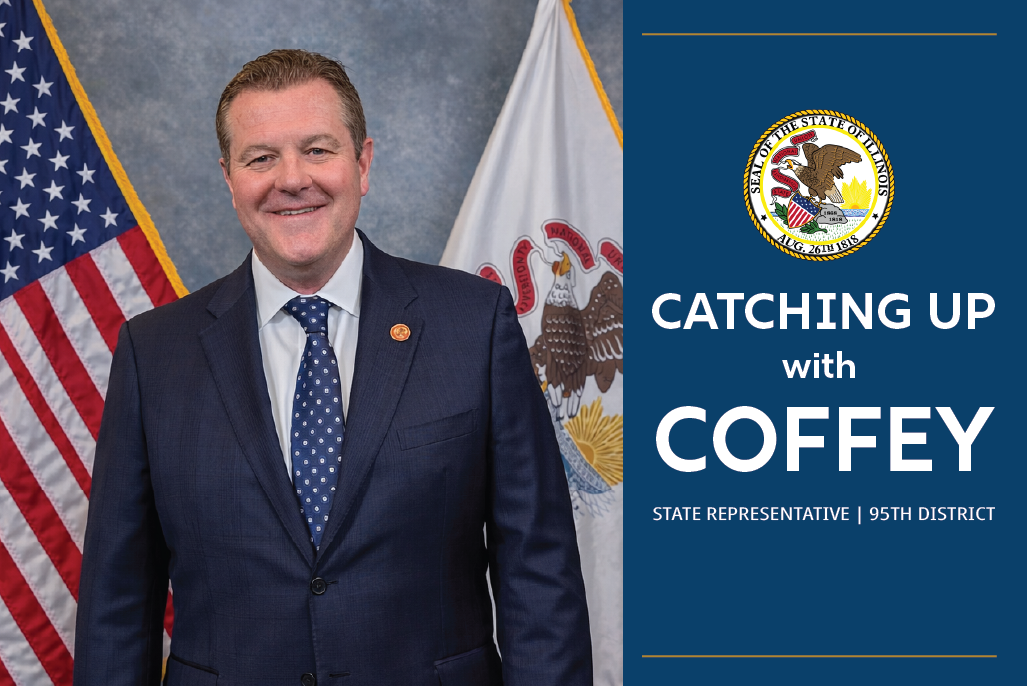
State Representative Mike Coffey spoke with WAND and believes communities are less safe because of pretrial release.
Three things to know about the end of cash bail in Chicago three years later
Three years ago, Illinois became the first state to entirely eliminate cash bail.
The measure was part of the larger crime bill known as the SAFE-T Act. For Chicago, the results of ending cash bail have been mixed.
Here are three things to know about the end of cash bail in Chicago:
- Almost half of all defendants arrested in Cook County cannot be legally detained after their first court appearance.
- When comparing similar defendants, more were released, and more were charged while on release, after cash bail ended.
- Overall crime has dropped, but that is in line with national trends.
Reforms such as easing the process for prosecutors to file a petition seeking detention and allowing detention for repeat offenders or those deemed a threat to animals or property would mitigate the problems with the measure.
Read more from the Illinois Policy Institute.
JOBS
Unemployment Rate Falls and Payrolls Down in August
The Illinois Department of Employment Security (IDES) announced Thursday that the unemployment rate was 4.7 percent in August, down -0.2 percentage point from July, and up +0.4 percentage point from the same month, one year ago, based on data provided by the U.S. Bureau of Labor Statistics (BLS). The revised July unemployment rate was 4.9 percent.

Total nonfarm payrolls decreased over-the-month in August, down -4,400 (-0.1%) to 6,175,600. The July monthly change in payrolls was revised from the preliminary report, from +11,700 to +15,300. The August payroll jobs estimate and unemployment rate reflect activity for the week including the 12th.
The industry sectors with the largest monthly payroll jobs increases included: Leisure and Hospitality (+1,800), Construction (+1,500), and Professional and Business Services (+1,000). The sectors with the largest over-the-month jobs decreases included: Private Education and Health Services (-6,100), Financial Activities (-1,700), and Trade, Transportation and Utilities (-1,000).
Compared to a year ago, total nonfarm payroll jobs were up +15,000 jobs. The industry groups with the largest jobs increases included: Construction (+13,400), Private Education and Health Services (+9,600), and Other Services (+4,000). The industry groups with the largest jobs decreases included: Financial Activities (-15,800), Information (-2,900) and Trade, Transportation and Utilities (-700). In August, total nonfarm payrolls were up +0.2% over-the-year in Illinois and up +0.4% in the nation.
CORRUPTION
Amid Ongoing Controversy, Murri Briel Steps Down from Welch’s PR Working Group

According to Capitol Fax, State Representative Murri Briel has stepped down from Speaker Chris Welch’s Workplace Culture and Accountability Working Group, adding another setback to an initiative that was supposed to address workplace culture in the Illinois House but has instead turned into a publicity stunt that has only resulted in bad press.
Briel’s departure comes amid allegations involving her conduct toward a former employee, including allegations that she supplied drugs in her campaign office and sexually harassed a former employee.
The timing raises serious questions about Welch’s decision to put an alleged sexual harasser on a working group tasked with addressing the very workplace culture issues now surrounding her.
The working group was already struggling before it got off the ground. Three other Democrats reportedly withdrew after learning their names had been publicly announced without agreeing to participate. Now, a fourth member is leaving amid serious allegations of workplace misconduct.
Speaker Welch cannot claim to be fixing a broken workplace culture while surrounding himself with lawmakers facing serious misconduct allegations. Instead of demanding accountability, Welch appears more focused on managing the political fallout from scandal after scandal.
Meanwhile, House Republicans have pushed concrete ethics reforms, including requiring Legislative Inspector General reports to be made public within 60 days, prohibiting campaign funds from being used for criminal defense related to misconduct, and suspending pension benefits for public officials charged with felonies related to their official duties.
Carol and Aaron Ammons were charged with multiple counts of wire fraud and obstruction of justice respectively, stemming from an FBI investigation into the couple.
The lawmaker is alleged to have misused campaign funds and conducted a kickback scheme – when state grant money was given to nonprofits in the district employing their daughter, Titianna Ammons.
Titianna Ammons is also being tried in the Central District of Illinois for unrelated charges.
Read more on the Ammons’ corruption trial from The Center Square.